Your Wallet This Week: Fed Rate Hike, 5% Treasury Yield, Recalls, and Airport ID Fees
This week's practical takeaway: the Federal Reserve raised its benchmark rate, long-term Treasury yields returned to 5%, a large Volkswagen/Audi steering recall became searchable by VIN, federal health officials kept a sprout-related Salmonella warning active, and travelers without acceptable identification now face a $45 TSA identity-verification option that still does not guarantee passage through security. These are separate stories, but they share one useful theme: the headline matters less than the next bill, deadline, or safety check that applies to you.
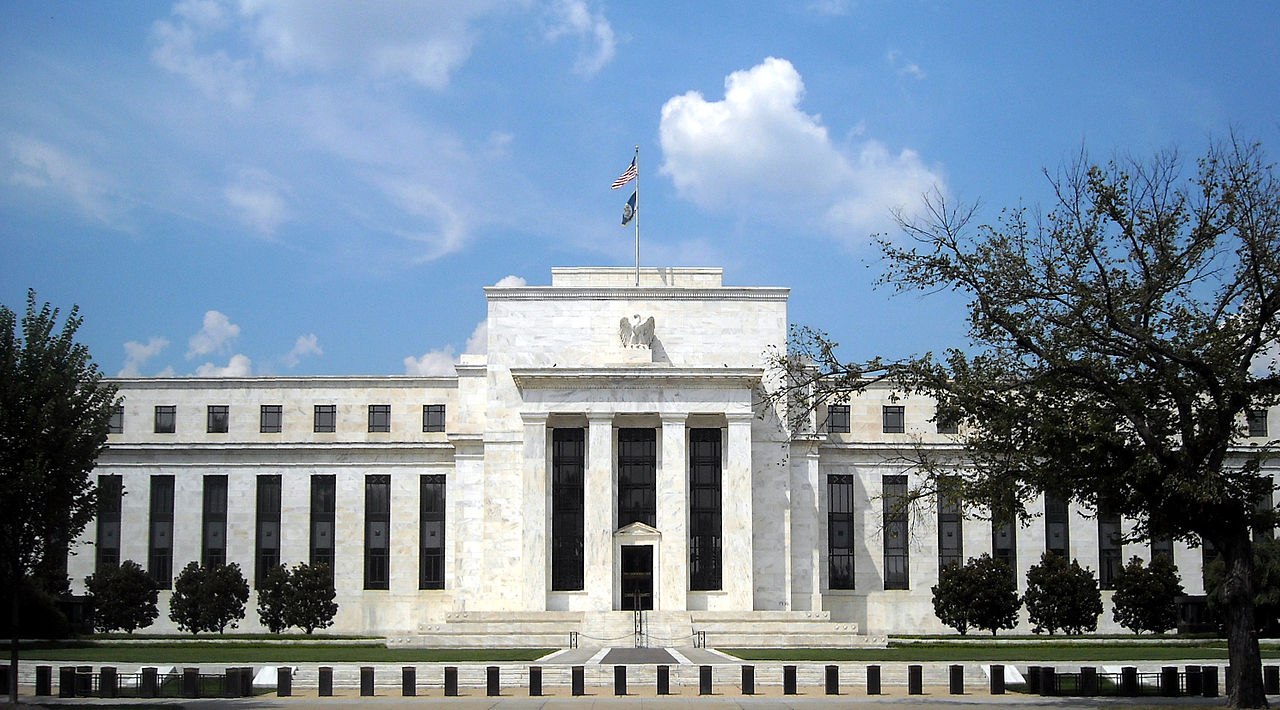
1. The Fed raised rates: check variable debt before chasing a new savings offer
On September 16, the Federal Open Market Committee voted 12–0 to raise its target range by one-quarter percentage point, to 3.75%–4.00%. The Federal Reserve said economic activity was expanding at a solid pace and inflation remained elevated. The move was the first increase in the benchmark rate since 2023, according to the Associated Press.
The federal funds rate is not the interest rate printed on your credit-card statement, auto contract, mortgage note, or savings account. It is an overnight rate between banks that influences a chain of other borrowing and deposit rates. Variable-rate products can react more quickly than fixed loans, while banks may change deposit yields on their own timetable.
For a simple example, consider a $6,000 credit-card balance whose annual percentage rate rises from 21.00% to 21.25%. If the balance stayed unchanged for a year, the extra 0.25 percentage point would add about $15 in simple annual interest. That is not a forecast because card interest compounds daily and balances move, but it shows why the balance matters more than the drama of a quarter-point announcement. On a $30,000 variable line, the same difference is about $75 a year before compounding.
What to do: list every variable-rate balance, its current APR, and the next reset date. Pay extra attention to high-rate revolving debt. If you are shopping for savings or certificates of deposit, compare annual percentage yield, minimum balance, early-withdrawal penalty, deposit-insurance coverage, and how long the rate is guaranteed. A higher advertised rate is not automatically better if fees or access restrictions erase the gain.
2. A 5% Treasury yield can move mortgages even when your existing loan does not change
AP reported that the 10-year Treasury yield climbed back to 5% on September 18, a level last seen in 2023. The same report described oil prices as volatile after rising sharply during the Iran conflict. Long-term Treasury yields influence many borrowing markets because lenders compare other loans with the return available on government debt. Mortgage rates do not move point-for-point with the Federal Reserve's overnight target, and they can rise even when many borrowers expect a future rate cut.
If you already have a fixed-rate mortgage, neither the Fed decision nor a higher Treasury yield changes the contract rate. The immediate effect appears when you apply for a new mortgage, refinance, use a home-equity product, finance a vehicle, or when a lender reprices a business loan. Renters can also feel the effect indirectly if higher financing and insurance costs feed into a landlord's future renewal decision, although local laws and market conditions still control the actual change.
What to do: obtain loan estimates on the same day, with the same loan amount, points, lock period, and credit assumptions. Compare the annual percentage rate and total five-year cost, not only the headline rate. A lower rate bought with points can take years to break even. If you expect to sell or refinance before that break-even date, paying points may not recover its cost.
3. Volkswagen and Audi owners should check the VIN now, not wait for a letter
National Highway Traffic Safety Administration campaign 26V590 covers an estimated 208,724 vehicles: certain 2018 Volkswagen Tiguan, 2018–2019 Volkswagen Atlas, and 2019–2021 Audi Q3 models. NHTSA says a bolt attaching the steering rack to the subframe may corrode and break. A broken steering-rack housing can cause a loss of steering control and raise crash risk.
Volkswagen plans to replace the right-side steering-rack mounting bolt free of charge. Owner letters are expected to be mailed November 10, but affected VINs became searchable on NHTSA.gov on September 16. The model and year ranges are not proof that every vehicle is included; the VIN lookup is the authoritative check for an individual vehicle.
What to do: enter your VIN in NHTSA's recall lookup or the manufacturer's recall tool. Save the result and contact a dealer if the vehicle is included. Ask whether a remedy is available now, how long the repair will take, and whether the manufacturer has issued any interim driving advice. Do not pay a third party for a safety-recall repair that the notice says the dealer will perform free of charge.
4. The sprout Salmonella investigation is still active
The Food and Drug Administration and Centers for Disease Control and Prevention are investigating Salmonella illnesses linked to recalled broccoli sprouts grown by Evergreen Fresh Sprouts. The FDA page says the affected products were packed in plastic bags or clamshell containers with expiration dates of September 7, 9, 11, 14, and 16. Confirmed distribution included Idaho, Montana, and Washington, while the agency warned that products could have reached additional states.
As of the FDA's September 9 update, 22 illnesses had been reported across four states and two people had been hospitalized. Everyone interviewed reported eating sprouts. Salmonella symptoms commonly include diarrhea, fever, and abdominal cramps, usually beginning 12 to 72 hours after exposure. Young children, older adults, and people with weakened immune systems face a higher risk of severe illness.
What to do: do not eat, serve, or sell the recalled sprouts. Check the product, grower, package, and expiration date rather than relying on appearance or smell. Clean and sanitize shelves, containers, and utensils that touched the product to reduce cross-contamination. Contact a health-care professional if symptoms are severe or if a higher-risk person becomes ill. This section is general safety information, not a diagnosis.
5. Flying without acceptable ID can now mean a $45 fee—and still no guarantee
TSA's ConfirmID page says an adult traveler who does not have a REAL ID or another acceptable form of identification can choose to pay $45 for an identity-verification attempt. Payment is made through Pay.gov, and the traveler must enter a legal name, travel start date, and email address. A payment is valid for 10 days from the listed travel date.
The fee does not buy a flight credential and does not guarantee that TSA can verify the traveler's identity. TSA warns that a person who declines the process, or cannot be verified, may not be allowed through security and could miss the flight. Each adult age 18 or older without acceptable ID must complete the process separately.
What to do: check TSA's acceptable-ID list before leaving for the airport. A passport can be an acceptable alternative to a state REAL ID. If ConfirmID is necessary, use only the official TSA/Pay.gov route, enter the travel date carefully, and keep the email receipt on paper or on a charged device. The $45 fee should be treated as a fallback cost, not a substitute for planning.
One date worth pinning down: this is not a change that happened this week. TSA's ConfirmID option took effect February 1, 2026, announced in the agency's own press release of January 15, 2026. If you have been flying on a non-compliant ID since February, you have already been inside this policy — the fee is simply being met more visibly at checkpoints now. Treat the $45 as a worst-case line item in your travel budget, not a new tax announced this week.
One-page action list for the weekend
| If this applies to you | Do this first | Do not assume |
|---|---|---|
| Variable-rate borrower | Record APR, balance, and reset date | Every lender will move by exactly 0.25% |
| Mortgage shopper | Compare same-day loan estimates | A Fed rate is a mortgage quote |
| Tiguan, Atlas, or Q3 owner | Run the official VIN recall check | Your model year alone proves inclusion |
| Sprout buyer | Check grower, package, and expiration date | Washing makes a recalled product safe |
| Traveler without acceptable ID | Review TSA's list before departure | Paying $45 guarantees checkpoint entry |
What we would prioritize
The safety checks come first because they have hard consequences and cost nothing: run the VIN, inspect the sprouts, and confirm identification before travel. The interest-rate stories deserve a calmer response. A quarter-point policy move does not require everyone to refinance, transfer balances, or move savings on the same day. It does justify reviewing variable debt and comparing offers with matching assumptions.
This roundup distinguishes confirmed agency facts from consumer calculations. The interest examples are simple scenarios, not quotes from a lender. Prices, rates, recall status, and travel procedures can change, so use the linked official pages for the final decision.
More from USNewsExplained
- Last week's wallet roundup: August inflation, travel costs, food safety, and the Fed meeting
- Record gas prices, health premiums, and household planning
- The stopgap funding law and what it changed
Tip: With rates moving and new ID rules at the airport, it helps to track variable-rate payments in one place — a simple budget planner works well — and to keep your passport, REAL ID paperwork, and VIN records together in a home safe. (These are Amazon Associate links — we may earn a small commission on qualifying purchases.)
Primary and authoritative sources
- Transportation Security Administration, "$45 Fee Option for Air Travelers Without a REAL ID Begins February 1" (press release, January 15, 2026): tsa.gov
- Federal Reserve: September 16 FOMC statement
- Associated Press: Federal Reserve rate increase
- Associated Press: Treasury yields and oil-price market effects
- NHTSA recall acknowledgment 26V590
- FDA: Salmonella outbreak investigation linked to sprouts
- TSA: ConfirmID requirements and $45 fee
Information checked September 19, 2026. This article provides general consumer information and does not offer individualized financial, medical, legal, or travel advice.


Comments
Post a Comment